
Misconception first: “All browser wallets are the same — pick the most popular one and you’re fine.” That’s convenient, but it collapses different security models, UX trade-offs, and operational controls into a single false choice. For DeFi power users who run multi-chain strategies, interact with complex contracts, and carry institutional or shared custody requirements, those differences matter. Rabby is a distinct response to problems that MetaMask-style wallets leave exposed: blind signing, frequent manual network switching, and scattered approvals. But it is not a panacea. This piece walks through how Rabby works, where it meaningfully changes the risk/efficiency calculus, and where its limits still force trade-offs.
Short version for practitioners: if you need explicit transaction simulation, automatic chain switching, hardware and multi-sig compatibility, and tools to prune dangerous token approvals, Rabby is worth installing and testing in controlled environments. It does not replace fiat on-ramps or in-wallet staking, and it doesn’t eliminate systemic smart-contract risk. Read on for the mechanisms, the trade-offs, and a compact decision framework you can reuse.
How Rabby changes the signing flow — mechanism, not magic
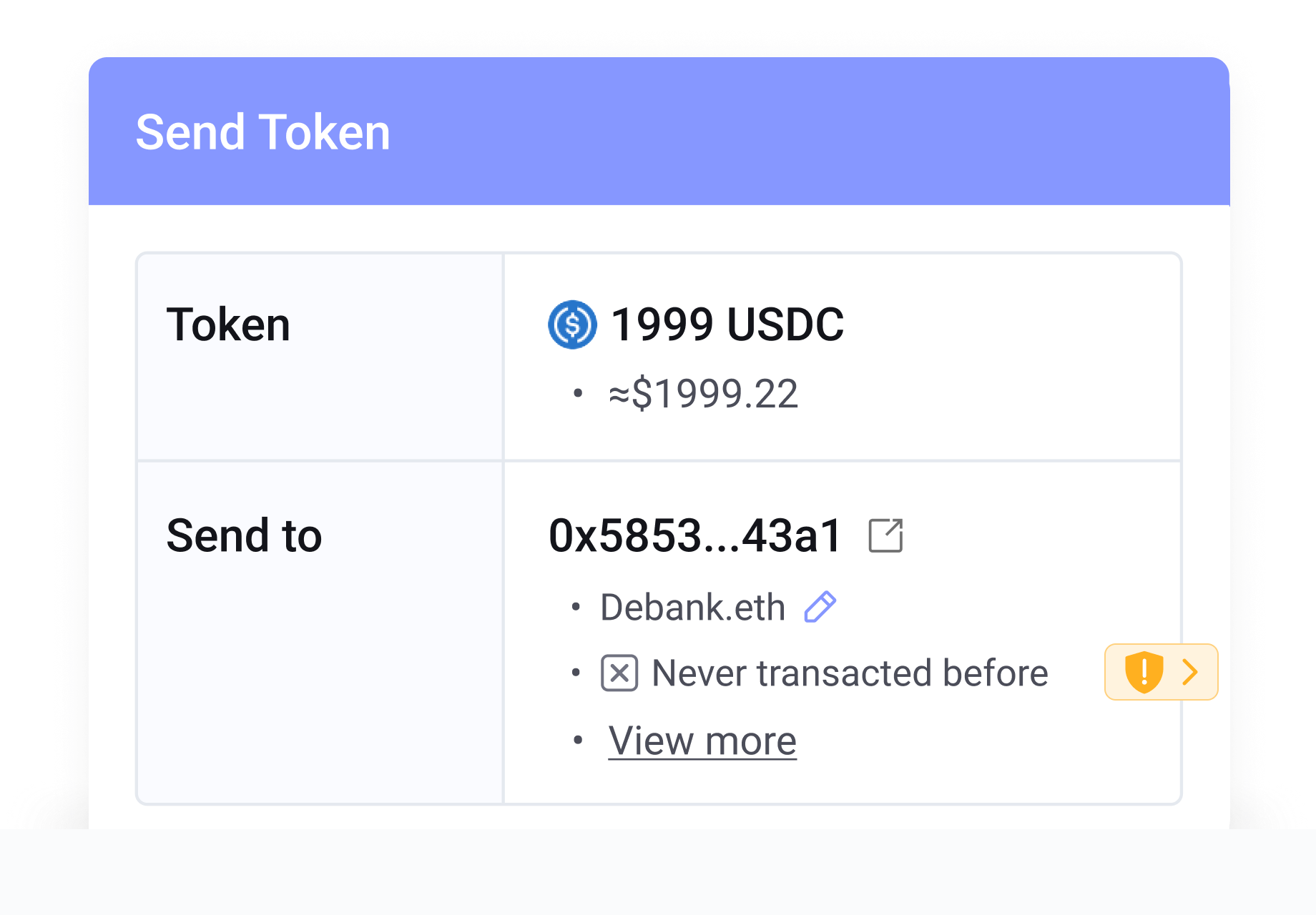
The core behavioral innovation in Rabby is transaction simulation: before you sign, Rabby runs a dry-run of the transaction against a local or remote node and computes precise estimated balance deltas and gas costs. Mechanistically, this is different from UI-only transparency. Rather than showing the raw encoded calldata (which few humans can parse), Rabby translates the calldata into human-friendly outcomes — token X will decrease by Y, contract Z will receive an approval, gas will cost N — and surfaces specific red flags such as interactions with previously exploited contracts.
Why that matters: blind signing — authorizing an opaque calldata blob — is a major vector for losses. Simulation replaces a probabilistic trust in the app with a direct, deterministic preview of effects. For power users who batch trades across AMMs, bridge assets, or interact with perpetuals and liquidations, knowing the exact balance changes before committing reduces surprise failures and costly MEV reverts. Rabby’s pre-transaction risk scanning and approval-revocation tools form a defensive stack: simulate, scan for known bad patterns, then either revoke dangerous approvals or require hardware confirmation.
Practical feature tour and the friction points it removes
Rabby’s multi-chain posture is pragmatic: support for 90+ EVM-compatible chains means fewer network-add rituals, and automatic network switching minimizes failed tx attempts when a dApp expects Arbitrum but your wallet is still on Ethereum mainnet. Coupled with a cross-chain gas top-up, this reduces a common operational tax for active arbitrageurs and multi-chain traders — the time and funds wasted transferring gas tokens just to nudge a position.
On the custody and institutional side, Rabby integrates with multi-sig and enterprise tools such as Gnosis Safe and Fireblocks. That’s a deliberate signal that Rabby’s designers expect professional users: this isn’t just a personal hot wallet, it’s a node in institutional workflows. Hardware wallet compatibility across Ledger, Trezor, Keystone, and others further closes the gap between convenience and custody.
Where Rabby meaningfully overperforms — and where it doesn’t
Strengths worth underscoring:
– Transaction simulation and humanized previews reduce blind-signing risk and improve decision quality on complex DeFi ops. Mechanically, this removes an entire class of UX-driven signature errors.
– Approval revocation in-wallet is a direct, high-ROI mitigation for long-lived token approvals that otherwise remain a persistent attack surface.
– Automatic network switching and cross-chain gas top-up save both time and gas cost overhead when moving across chains rapidly.
Important limitations and trade-offs:
– No built-in fiat on-ramp. For U.S. users accustomed to buying on-ramps inside wallets, Rabby requires using third-party exchanges or services. That adds operational steps and potential KYC/AML trade-offs.
– No native staking UI. If you want to stake from the same in-wallet flow, you’ll still rely on external services or bespoke dApp flows. For long-term yield strategies, this means additional monitoring and UX fragmentation.
– Smart-contract risk remains. Rabby can flag suspicious contracts and freeze or respond to incidents (as happened in 2022 when a Rabby Swap contract was exploited and the team froze the contract and compensated users). But simulation and scanning depend on up-to-date threat intelligence feeds; a zero-day exploit in a novel contract pattern can still bypass rule-based detection. In short: Rabby reduces human error and some attack surfaces, but it cannot make on-chain contracts inherently safe.
Installing Rabby in practice (quick operational checklist)
For a U.S.-based DeFi power user preparing to adopt Rabby as a browser extension or desktop client:
1) Start with a dry run: install the extension on a secondary browser profile. Import a watch-only address first, then connect a hardware wallet for signing tests. Never import a live seed into a new tool without testing.
2) Test transaction simulations on small test trades across two chains you use often (e.g., Ethereum and Arbitrum). Verify the human-readable deltas match actual on-chain outcomes.
3) Run approval revocation against older approvals you granted to DEX contracts — practice revoking and re-granting limited allowances.
4) If you operate with shared custody, connect your multi-sig setup and test signing flows across devices and signers.
If you want the official installation page and more walkthroughs, start at this resource for the rabby wallet and match your test scenarios to real workflows.
Decision framework: when to adopt Rabby, when to pair it with other tools
Use this simple heuristic: if you routinely do multi-chain DeFi ops, manage many token approvals, or run institutional/multi-sig workflows, Rabby should be in your toolkit. If your primary needs are fiat on-ramp purchases, integrated staking dashboards, or custody-free custodial convenience, Rabby alone won’t meet every requirement.
Pairing recommendations:
– For fiat on-ramp: link an exchange account or a custodial wallet for purchases, then move assets to Rabby for active DeFi use.
– For long-term staking: use a specialist staking service with dedicated slashing protections, and keep operational keys in hardware wallets accessible via Rabby for management.
– For high-assurance institutional activity: layer Rabby with multi-sig and custody providers like Gnosis Safe and Fireblocks rather than relying on a single desktop or extension client.
What to watch next — signals that should change your posture
Three conditional scenarios to monitor:
1) Threat intelligence feed quality: Rabby’s pre-transaction scanning only helps when the threat database is current. If you start seeing lagging threat updates or missed patterns, increase manual vetting and external contract audits in your workflow.
2) Native product additions: if Rabby adds fiat on-ramp or staking, the operational friction for some users will shrink — but expect trade-offs in compliance and business model (KYC implications). Watch whether those features are implemented via partners or native rails.
3) Ecosystem consolidation: widespread adoption by institutional custody providers would shift Rabby from a sophisticated power-user tool to a default enterprise integration. That would change its threat model and possibly increase regulatory attention in the U.S.
FAQ
Is Rabby safe enough to replace MetaMask for active DeFi trading?
“Safe” is layered. Rabby materially reduces blind-signing and makes approval management easier; both are high-leverage safety improvements for traders. But safety also depends on your operational habits — seed management, hardware wallet use, and auditing the smart contracts you call. For many traders, Rabby+hardware wallet offers a better trade-off than MetaMask alone; it’s not a substitute for prudent contract vetting.
Can I use Rabby with Ledger or other hardware wallets?
Yes. Rabby supports a wide list of hardware devices (Ledger, Trezor, Keystone, and others). Use the hardware device for private-key signing while Rabby provides simulation, scanning, and UI conveniences — the combination preserves cold-key security while improving transaction visibility.
What happened with the 2022 Rabby Swap exploit?
In 2022 a smart contract associated with Rabby Swap was exploited for roughly $190,000. The development team froze the contract, compensated affected users, and instituted deeper audits. That episode illustrates two points: first, a wallet provider can mitigate and remediate, but it cannot immunize users from third-party contract failures; second, institutional users should demand proof of ongoing security processes, not just past responses.
Does Rabby let me buy crypto with USD inside the wallet?
No. Rabby does not have a built-in fiat on-ramp. U.S. users should expect to buy on regulated exchanges or on-ramp providers and then migrate funds into Rabby for on-chain activity.
Conclusion: Rabby is not a silver bullet, but it is a disciplined redesign of the browser-wallet interaction model for DeFi power users. Its simulation-first approach changes the locus of control from faith in opaque calldata to a predictable preview of state change — a small conceptual shift that has outsized practical effects. Adopt it where its strengths match your workflow, pair it where it lacks features, and keep watching intelligence feeds and product additions to recalibrate your trust over time.